Concrete driveways in Northeast Ohio work hard. Between the weight of daily vehicle traffic, the relentless freeze-thaw cycles of Ohio winters, road salt exposure, and years of UV exposure, even a well-installed driveway eventually reaches the end of its useful life. The question is: when does repair stop making sense and replacement become the smarter investment?
Here are the five clearest signs that your driveway in Westlake, Rocky River, Bay Village, Avon, or anywhere on Ohio’s West Shore is ready to be replaced — and what to consider when planning the upgrade.
1. Widespread Cracking
Some cracking in concrete is normal and manageable. A hairline crack here and there, sealed promptly, is a maintenance item. But when cracking becomes widespread — multiple large cracks, cracking that’s spreading across significant portions of the surface, or cracking that follows no predictable pattern — you’re looking at a base failure or end-of-life condition that repair can’t address.
The key distinction: cracks that follow control joints are normal and manageable. Random cracking across the field of the driveway, or cracks that are widening progressively over time, indicate structural issues that seal-and-patch can’t fix. When you’re at this point, replacement gives you a fresh start with proper base preparation that prevents the same issues from recurring.
2. Significant Settlement or Heaving
When sections of your driveway have settled downward or heaved upward, creating uneven surfaces and tripping hazards, you have a base problem. Either the sub-base wasn’t adequately compacted at installation, or soil conditions have changed over time — either way, the result is concrete slabs that no longer sit level and can’t be made level without addressing what’s underneath them.
Mudjacking (pumping grout under settled slabs to raise them) can be a temporary solution for isolated settlement — but it doesn’t address the underlying cause and typically buys limited additional years. For driveways with significant, widespread settlement, replacement with proper base reconstruction is the lasting solution.
3. Surface Deterioration — Spalling and Scaling
Spalling and scaling refer to the flaking and pitting of the concrete surface — when the top layer of the concrete begins to come apart, leaving a rough, pitted texture. In Northeast Ohio, this is most commonly caused by the freeze-thaw cycle combined with deicing chemical exposure. When salt or calcium chloride penetrates the surface and the water beneath it freezes and expands, the surface layer delaminates.
Minor scaling on a small portion of the driveway can sometimes be addressed with resurfacing. Widespread scaling across most of the driveway surface — especially when it’s progressing — indicates that the concrete integrity has been compromised throughout, and resurfacing is only a cosmetic fix that won’t last.
4. Drainage Problems
Concrete driveways are designed to drain water away from the home and off the driveway surface. When settlement, heaving, or installation errors create low spots that pool water, several problems follow: ice formation in winter (creating safety hazards), accelerated freeze-thaw deterioration in those areas, and potential water intrusion toward the foundation.
Ponding water on your driveway is never normal — it indicates either a drainage design problem or a structural change from settlement. When drainage issues are widespread and the driveway is already showing other signs of age, replacement with properly designed drainage grades is the comprehensive solution.
5. It’s Simply Old — and You Want Something Better
For many homeowners in Westlake, Rocky River, and Avon, the decision to replace a driveway isn’t driven by failure — it’s driven by opportunity. The existing driveway is functional but dated: plain gray concrete, no decorative interest, maybe 20–30 years old and showing its age without being structurally compromised.
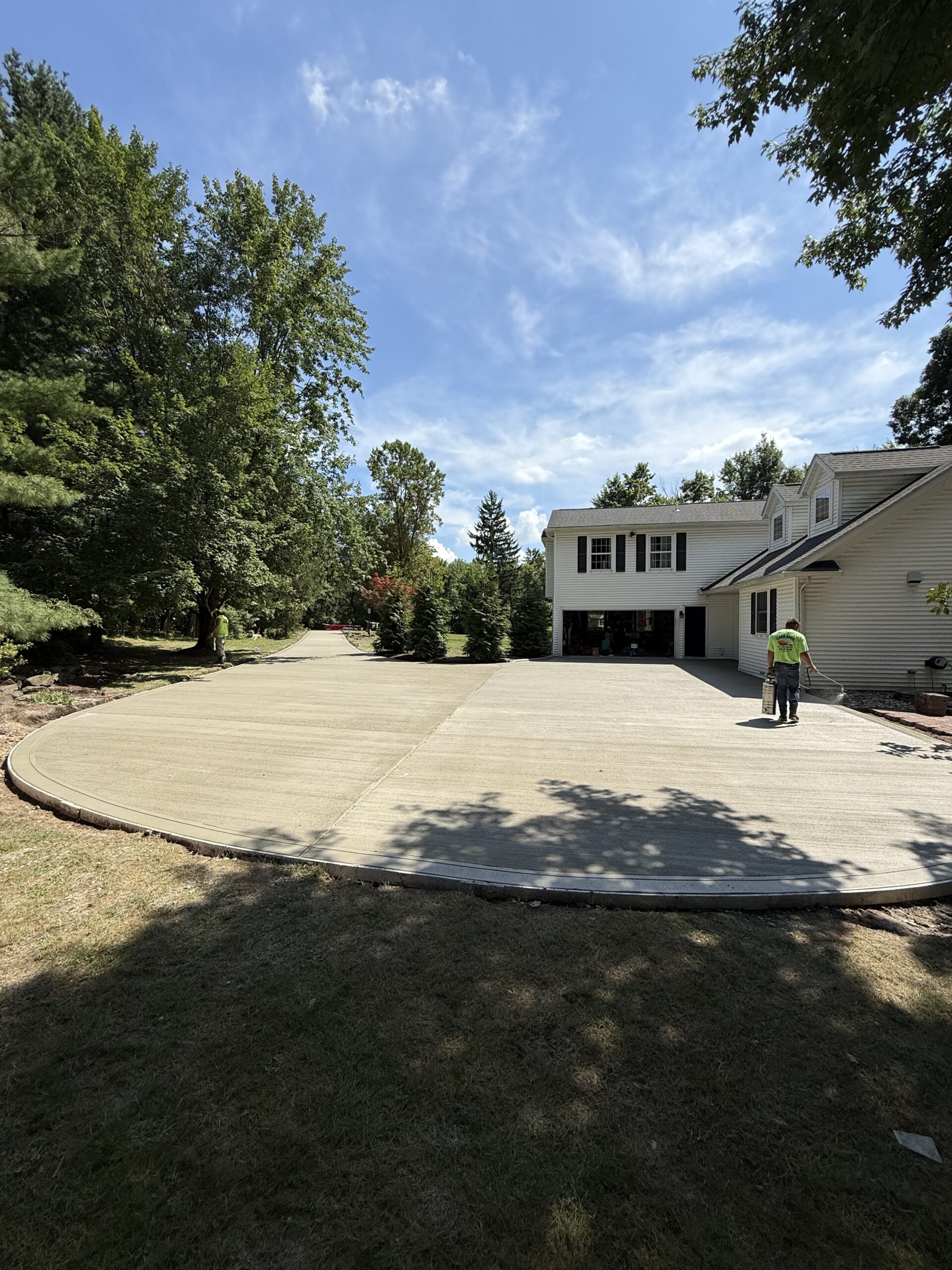
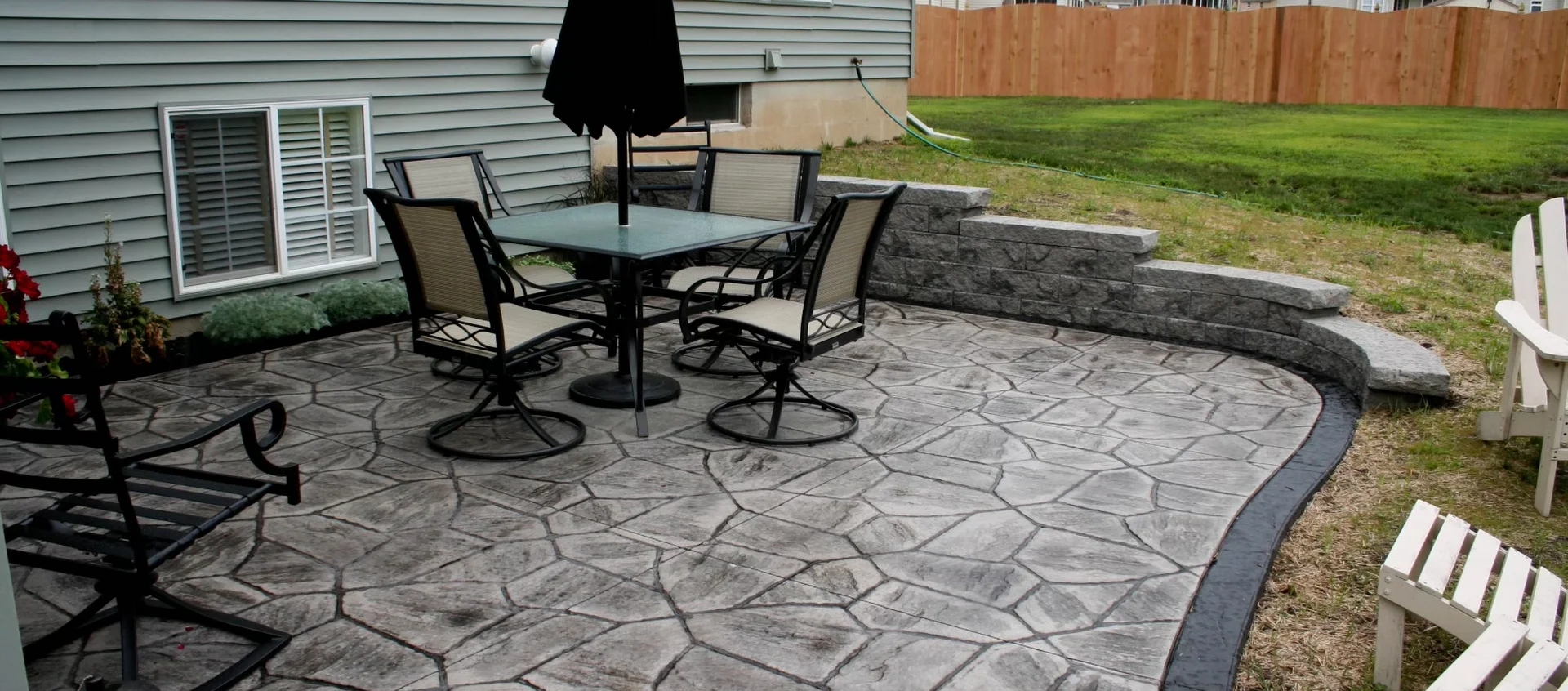
This is actually the best time to replace a driveway — before it becomes a problem rather than after. And when you’re replacing a dated plain driveway, the upgrade to stamped or decorative concrete is a relatively small additional investment with a dramatic difference in visual outcome. A bold stamped concrete driveway transforms your home’s curb appeal immediately and adds real value to the property.
Why Replacement Quality Matters
Whatever condition drives your decision to replace your driveway, the quality of the replacement installation determines how long the new driveway lasts and how good it looks over time. The failure modes of old driveways — cracking, settlement, scaling — are all preventable with proper installation practices.
At Tiny Construction LLC, we excavate to appropriate depth, install a properly compacted aggregate base, use 4,500 PSI concrete, place control joints correctly, and apply a quality sealer. These are the practices that produce a driveway that looks great and performs well for decades in Northeast Ohio’s climate.
FAQs
Can concrete driveways be resurfaced instead of replaced?
Resurfacing (applying a thin overlay over the existing concrete) can address cosmetic surface issues on a structurally sound base. If the underlying concrete has structural problems — base failure, widespread cracking, significant settlement — resurfacing is a temporary cosmetic fix that doesn’t address the cause. We assess each driveway individually to give you an honest recommendation.
How long should a concrete driveway last in Ohio?
A properly installed concrete driveway should last 30–50 years in Northeast Ohio conditions. The primary factors that shorten driveway life are low-strength concrete mix, inadequate base preparation, and deicing chemical damage.
What’s the process for driveway replacement?
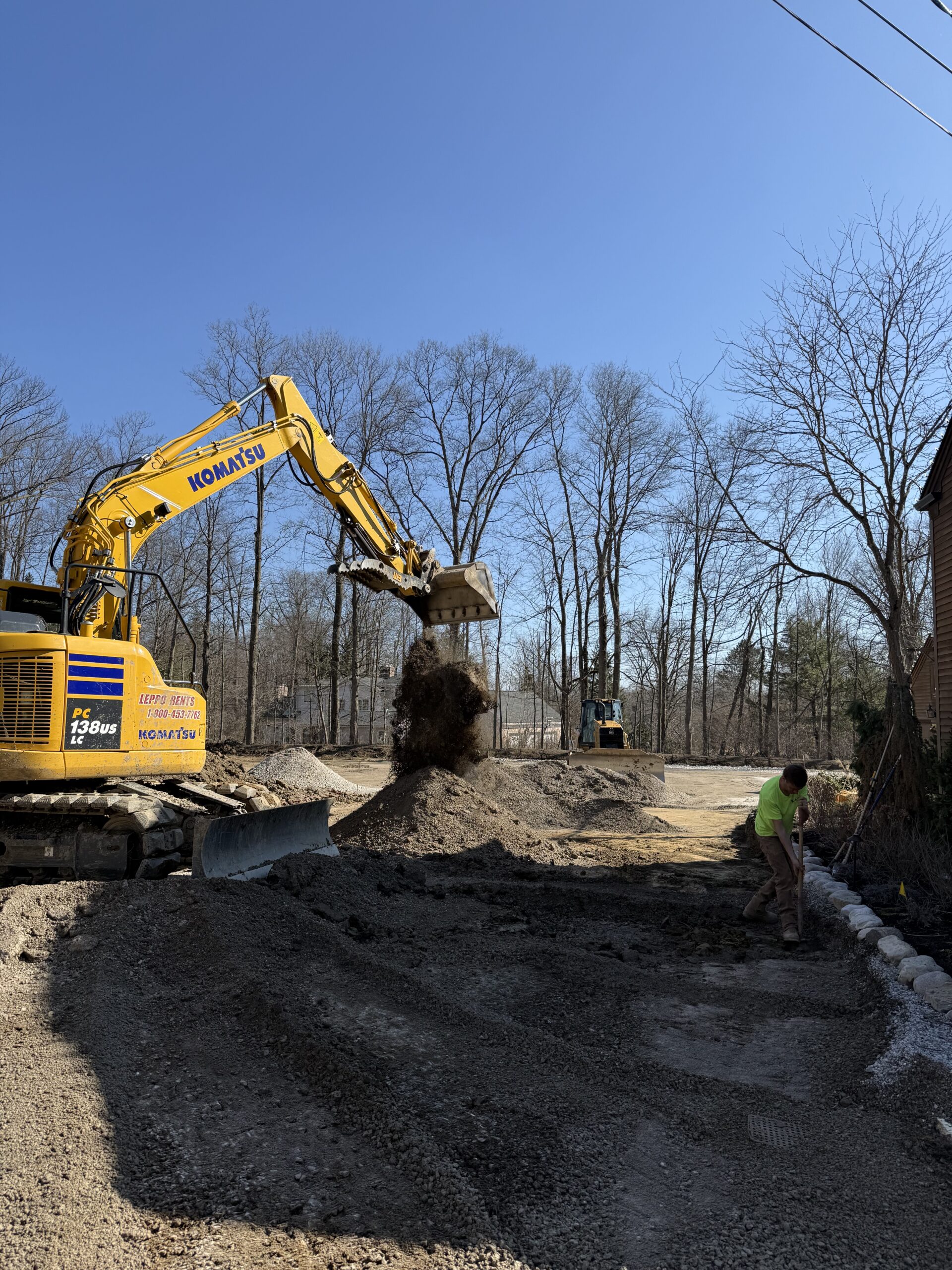
Demo and removal of existing concrete, excavation and base reconstruction, concrete placement, finishing, and sealing. The full process typically takes 3–5 days depending on size. We handle all phases including demo, haul-away, and final cleanup.
Is stamped concrete a good choice for a driveway in Ohio?
Yes — when installed with 4,500 PSI concrete, proper base prep, and appropriate sealer maintenance, stamped concrete performs very well on driveways in Northeast Ohio. The visual impact compared to plain concrete is substantial, and the additional maintenance is minimal (resealing every 2–4 years).
Ready for a New Driveway?
Tiny Construction LLC specializes in concrete driveway replacement and decorative concrete upgrades throughout Westlake, Rocky River, Bay Village, Avon, Avon Lake, Lakewood, Fairview Park, and Northeast Ohio. Call (440) 398-5158 for your free consultation and estimate. Where craftsmanship meets luxury.