If you’ve been planning a luxury outdoor living space in Westlake, Rocky River, Bay Village, or Avon, you’ve probably encountered the question: built-in seating walls, or high-end patio furniture? It’s not a small decision — seating shapes how your outdoor space looks, how it functions, and how it feels. And for high-end homes in Northeast Ohio, the answer is increasingly clear: built-in seating walls, integrated with quality movable furniture, create the most impressive and functional outdoor environments.
Here’s why — and how to think through the right combination for your project.
What Are Seating Walls?
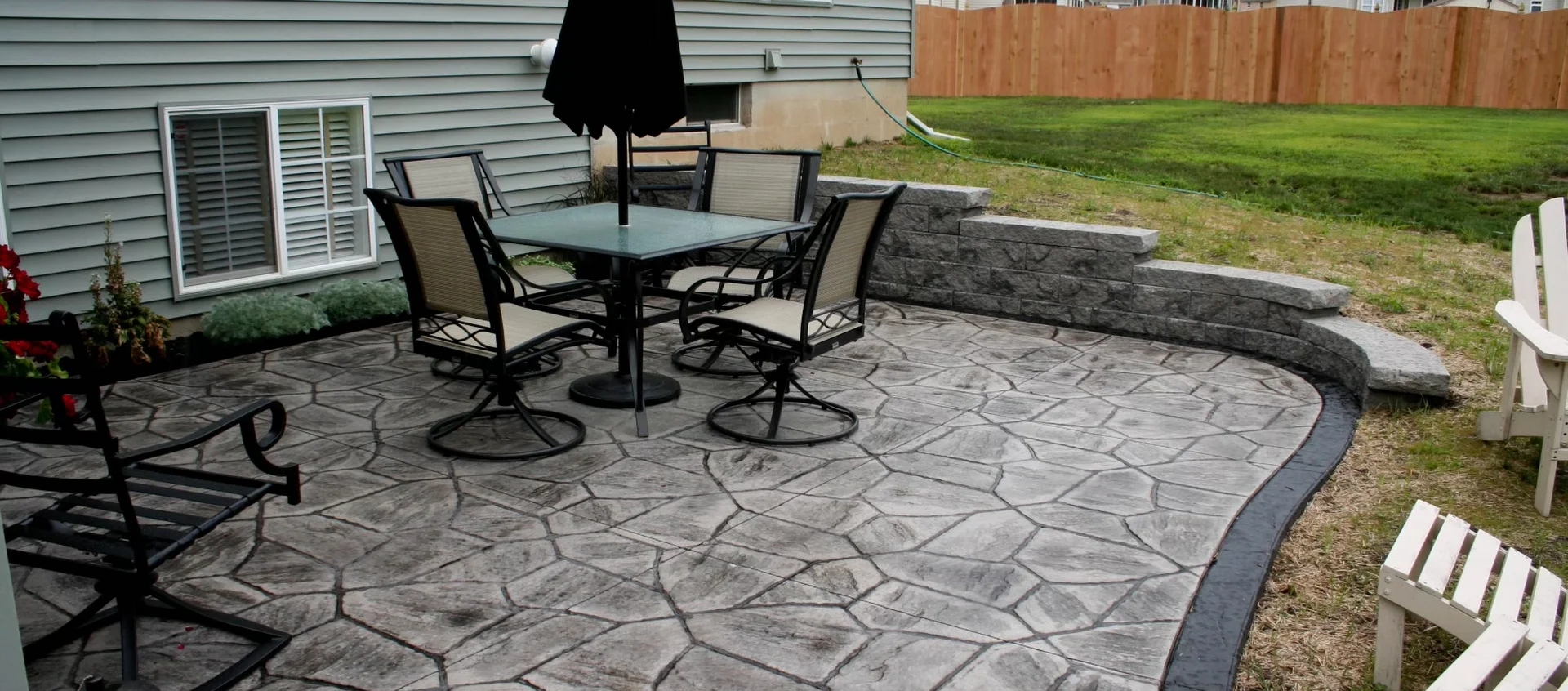
Seating walls are low masonry walls — typically 18–24 inches tall — built around the perimeter of a patio, fire pit area, outdoor kitchen, or along grade changes. They serve multiple purposes simultaneously: they define the outdoor space, they provide permanent seating capacity without requiring furniture, they add visual structure and architectural weight, and they serve as retaining elements where grade changes require them.
We build seating walls from concrete block with natural stone veneer, manufactured stone, or poured concrete — finished to complement the stamped concrete surfaces and overall aesthetic of the project. A properly designed seating wall is comfortable to sit on for extended periods, particularly when the cap stone is chosen for both aesthetics and seat comfort.
The Case for Built-In Seating Walls
They Make Your Space Look Intentional
The most striking difference between a thoughtfully designed outdoor living space and a basic patio with furniture is architectural permanence. Seating walls give your outdoor space the same sense of intentionality that interior design brings to indoor rooms. The space has structure, definition, and visual weight that patio furniture — no matter how beautiful — can’t replicate.
They Define Zones Without Walls
In an open backyard, defining distinct zones — the kitchen zone, the dining zone, the fire zone, the lounge zone — is challenging. Seating walls do this elegantly. A low curved wall around a fire pit creates a gathering space that feels enclosed and intimate without blocking sightlines. A straight wall at the edge of an outdoor kitchen creates a bar-height seating area that separates cooking from dining. These are design moves that elevate the entire project.
They Add Significant Seating Without Clutter
A 20-foot seating wall around a fire pit area comfortably seats 8–10 people with no furniture required. That’s seating that’s always there, always available, and never needs to be moved, stored, or replaced. For homeowners who entertain regularly, this is enormously practical.
They Last Forever
Quality masonry seating walls, properly built, last as long as your home. They don’t rust, fade, tip over in wind, or need to be replaced every 5–10 years the way furniture does. The upfront investment is higher than purchasing furniture — but the lifetime value is substantially better.
They Survive Northeast Ohio Winters
Good furniture needs to be stored or covered for winter in Northeast Ohio. Seating walls don’t. They sit through every Ohio winter without issue and look exactly the same in April as they did in October.
The Role of Movable Furniture
We’re not suggesting you eliminate furniture entirely. The best outdoor living spaces combine the architectural permanence of built-in elements with the flexibility of quality movable pieces. A dining table and chairs in the dining zone offer flexibility that a fixed dining surface doesn’t. A few quality lounge chairs in the sun create a zone that seating walls can’t. Throw pillows, outdoor rugs, and movable furniture humanize a space that might otherwise feel too architectural.
The formula that works: use seating walls to define zones and add structural seating, then layer in high-quality movable furniture for specific functional needs and comfort.
Design Considerations for Seating Walls
Height
Standard seating height is 18 inches. Comfortable seating height is 17–19 inches with back support or 18–20 inches without. We design seating walls for actual comfort — not just visual proportion.
Cap Material
The cap stone on a seating wall determines both its look and its comfort. Bullnose or eased-edge caps in natural stone, manufactured concrete, or porcelain are the most comfortable for extended seating. We match the cap material to the overall material palette of the project.
Curve vs. Straight
Curved seating walls around fire features create an intimate, gathering feel. Straight walls along kitchen counters create clean, contemporary lines. The choice depends on the architecture of your home and the overall design intent of the project.
FAQs
Are seating walls comfortable for long periods?
Yes — when designed correctly. The key is appropriate height (17–20 inches), a cap with a comfortable edge profile, and the option to add seat cushions for extended use.
How much do built-in seating walls add to a project cost?
Seating walls add scope and cost to any project — but the value they add in terms of seating capacity, visual quality, and permanence typically exceeds the cost over the life of the project.
Can seating walls be added to an existing patio?
Yes — in many cases. We assess existing conditions and tie new masonry work into existing surfaces cleanly. Call us to discuss your specific situation.
What materials work best for seating walls in Ohio?
Concrete block core with natural or manufactured stone veneer is our standard — it’s structurally sound, weather-resistant, and beautiful. We match the stone selection to the other materials in the project.
Let’s Design Your Outdoor Space
Tiny Construction LLC designs and builds complete outdoor living projects — stamped concrete patios, outdoor kitchens, seating walls, fire features, and hardscape integration — for luxury homeowners throughout Westlake, Rocky River, Bay Village, Avon, Avon Lake, Lakewood, Fairview Park, and Northeast Ohio. Call (440) 398-5158 for your free consultation. Where craftsmanship meets luxury.